Ethereum is testing a higher gas limit for the Glamsterdam upgrade
Glamsterdam tries to buy a higher gas limit by moving block building into the protocol. Multi-client devnets are testing ePBS, gas repricing, and block-level access lists. That work is still on a devnet, not mainnet.
By BLAKE Issues Desk / Published August 26, 2026 / Updated August 31, 2026
In late April, more than a hundred Ethereum core contributors sat under a sun that did not set, in Longyearbyen, Svalbard, a few miles from a seed vault tunneled into permafrost. The week was called Soldøgn. The deliverable was not a mainnet switch. It was a stable multi-client development network running the latest versions of enshrined proposer-builder separation, gas repricing, and block-level access lists. Treat that image at face value. A polar archive is a backup. A devnet is a rehearsal. Neither is the chain users pay for.
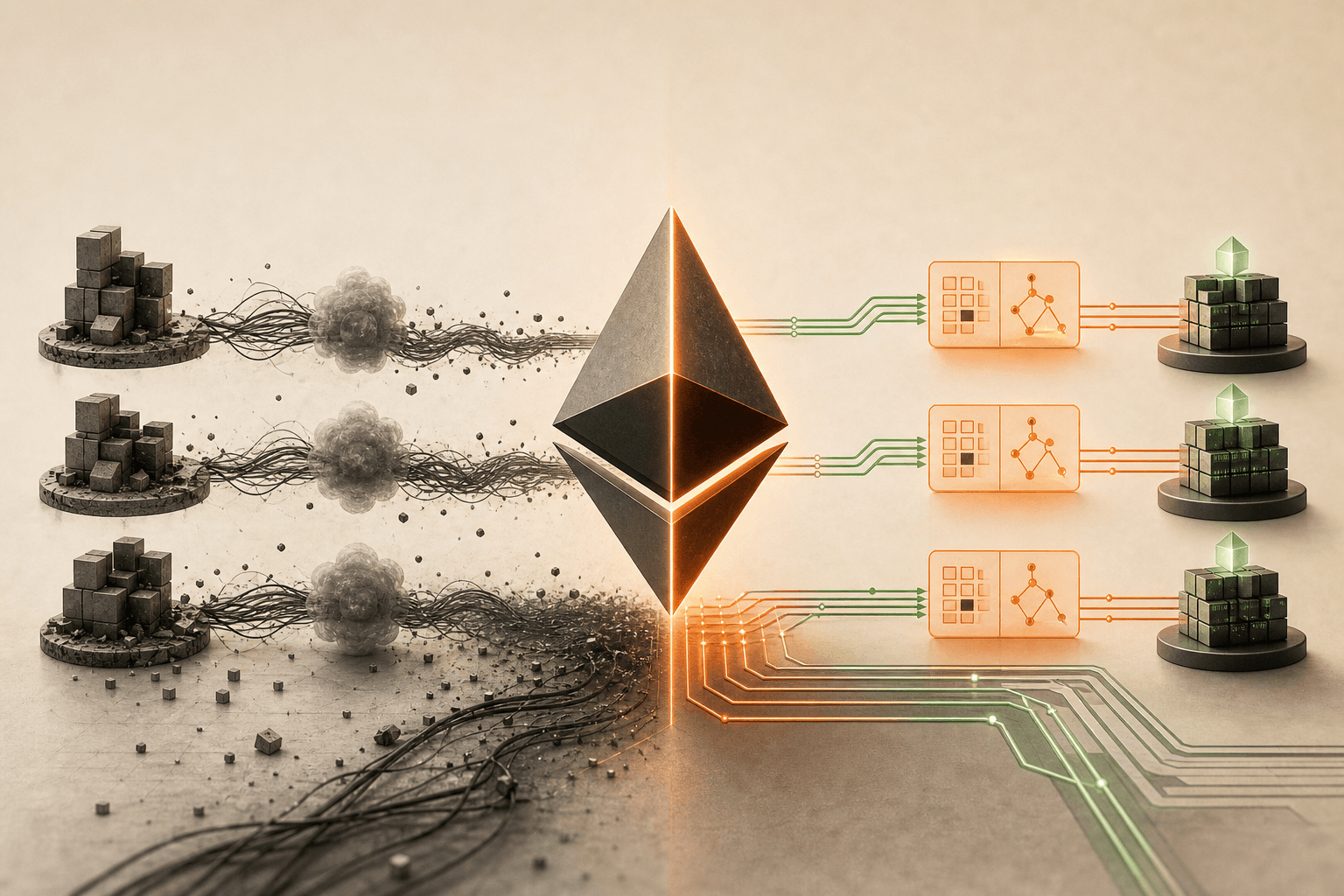
The combined design is intended to support a higher gas limit while reducing a current trust dependency in block production. Access lists give clients advance information about the state a block will touch, which makes more parallel work possible. Enshrined proposer-builder separation, ePBS, moves the builder-proposer relationship into the protocol rather than relying on outside relays. The Ethereum Foundation recap reported alignment on a post-Glamsterdam gas-limit floor of 200 million, stable ePBS implementations running with external builders, and final EIP-8037 repricing numbers. Those are engineering status claims from an interop week. They are not a shipped capacity number.
ethereum.org's security roadmap is the right official caution. ePBS "moves this split into the protocol, removing the need to trust relays." It is "a headliner of the upcoming Glamsterdam upgrade, targeted for 2026. No Mainnet date has been set; client teams are testing it on devnets (temporary test networks)." The builder guide for 2026 adds that Glamsterdam's headlines, BALs and ePBS, are meant to make it "safe to raise the block gas limit from 60 million today toward roughly 200 million," with activation "expected in the second half of 2026." Expected is not activated. Targeted is not a date. Client teams must implement complex consensus and execution changes consistently. Validators and builders must adapt infrastructure. Applications and users bear instability, delayed inclusion, or fee surprises. Higher capacity can increase node resource demands and pressure smaller operators. Protocol change, operator hardware, user fees, and the social process of AllCoreDevs are four different risks. A successful interop week is not proof against any of them. The Soldøgn recap is honest about remaining contention: whether a request signature should commit to the receiving builder, and how to keep a 1 ETH-staked-builder design resilient against P2P Sybil-based liveness attacks. Specs moved during the week. Dynamic state-byte pricing was dropped for a fixed cost. Accounting models were tried and reverted. That is how coordination risk looks in practice. Many clients have to agree, then keep agreeing after they go home. The upgrade also does not settle longer-term questions about censorship resistance or account abstraction. FOCIL, the inclusion-list design, is scheduled later, as a Hegotá headliner, precisely so ePBS and FOCIL "never ship as one untested combination." Native account abstraction remains a draft considered for a later fork. Status should stay stratified: proposed, selected, implemented, devnet-tested, testnet-activated, mainnet-activated. Record which clients participated and what broke. Presenting a 200 million gas target as delivered scale is a promotional roadmap. The bet is real. The chain has not taken it yet.
Free to play
Make your call with Beat Chuck
Check the challenge board for the latest open games.
All Beat Chuck games →